
If you are reading this because someone has just died, we are sorry, and we want this to be useful right now, not just informative. Here is what actually happens, and what needs to happen, in the days that follow.
The first 24 hours
Thai law requires a death to be reported and registered quickly.
If the death happened in a hospital, the hospital will issue an initial notification and guide you through the next step. If it happened at home or unexpectedly, contact the police first.
The death must then be registered at the local district office — the Amphoe. In Chiang Mai, this is Amphoe Mueang Chiang Mai. This is where the official Thai death certificate, the ใบมรณะบัตร (Bai Marana Bat), is issued.
Request several certified copies at this stage — banks, insurers, and the embassy will each want their own original.
If the death was sudden, unexplained, or the result of an accident, the process at this stage looks different — Thai law requires it to be investigated before a certificate can be issued. Our guide on why unnatural deaths bring unexpected complexities covers what to expect if this applies to your situation.
Notifying the embassy
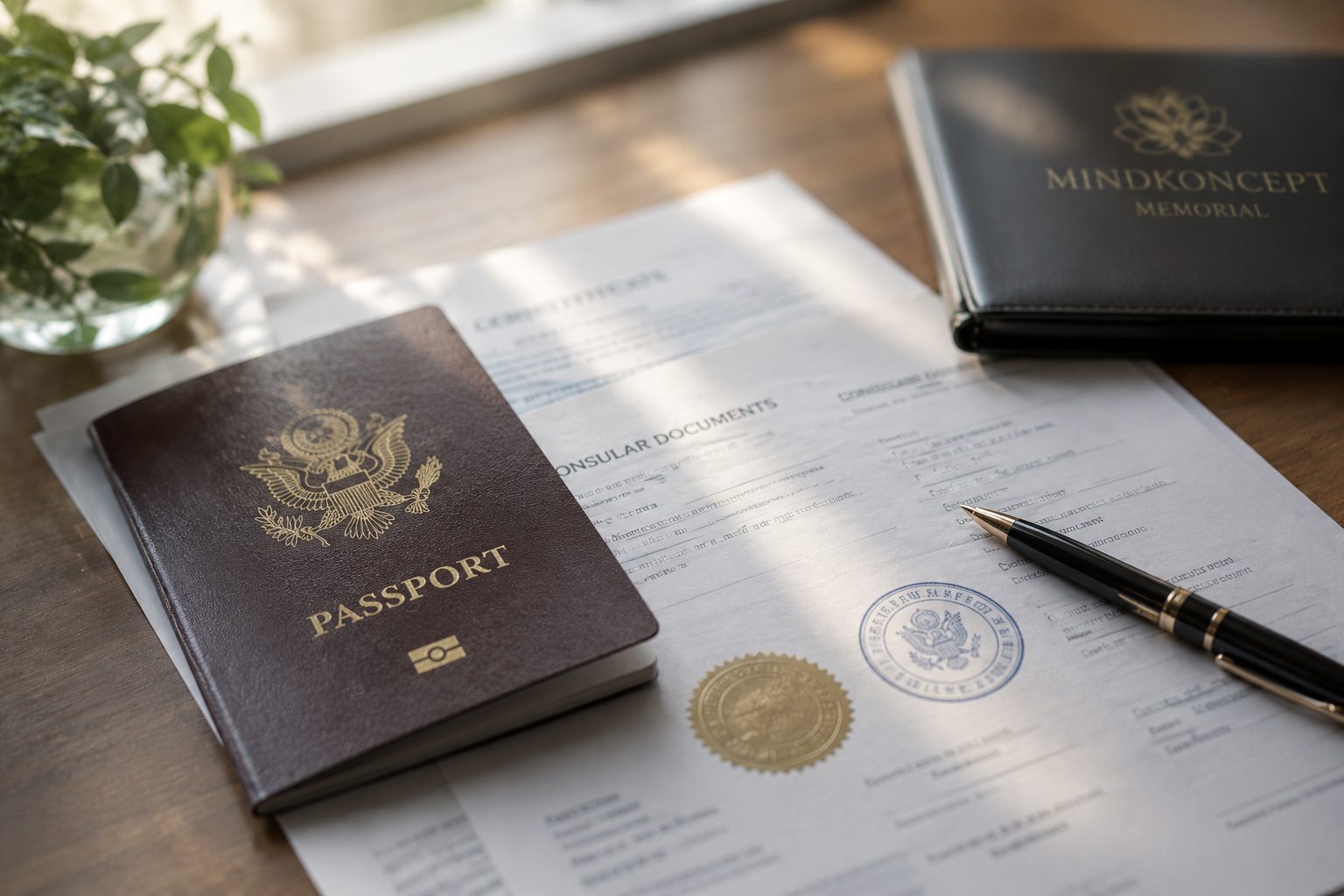
The relevant embassy plays an important supporting role, though it is more administrative than many families expect. What they typically do: issue a Consular Report of Death Abroad, help notify next of kin, cancel the passport, and provide a letter authorizing the release or transport of the body. What they generally do not do: pay for the funeral, or administer the estate.
The central decision: local service, or repatriation
Families generally choose between two paths. Local cremation or burial — cremation is the norm in Thailand and is available regardless of the deceased's religion; it is the faster, more straightforward option. Repatriation — returning the remains to the home country — requires an embalming certificate, a funeral director experienced in international transport, and coordination with the embassy: a more involved process with its own timeline.
Either path can be arranged with dignity. The right choice depends on the family's wishes, not on convenience alone. If you're weighing the practical side of either option, our guide on what affects funeral costs in Chiang Mai may help too.
If there are assets in Thailand
This is genuinely legal territory, not funeral-service territory, so we will be direct: foreigners cannot own land in Thailand. If there is a Thai will, it generally governs Thai-based assets; if not, the process is more involved. This needs a Thai lawyer, not a funeral director — we are happy to point you toward one if you need it.
Where we fit in
This entire process can be navigated by a family alone, but it does not have to be. Mindkoncept Memorial acts as a single point of contact — handling the coordination with authorities, the temple or church, and the practical arrangements, in English and Thai — so a grieving family is not learning an unfamiliar system from scratch.
This article is general information, not legal advice. For anything involving an estate, will, or property, please consult a qualified Thai lawyer.