
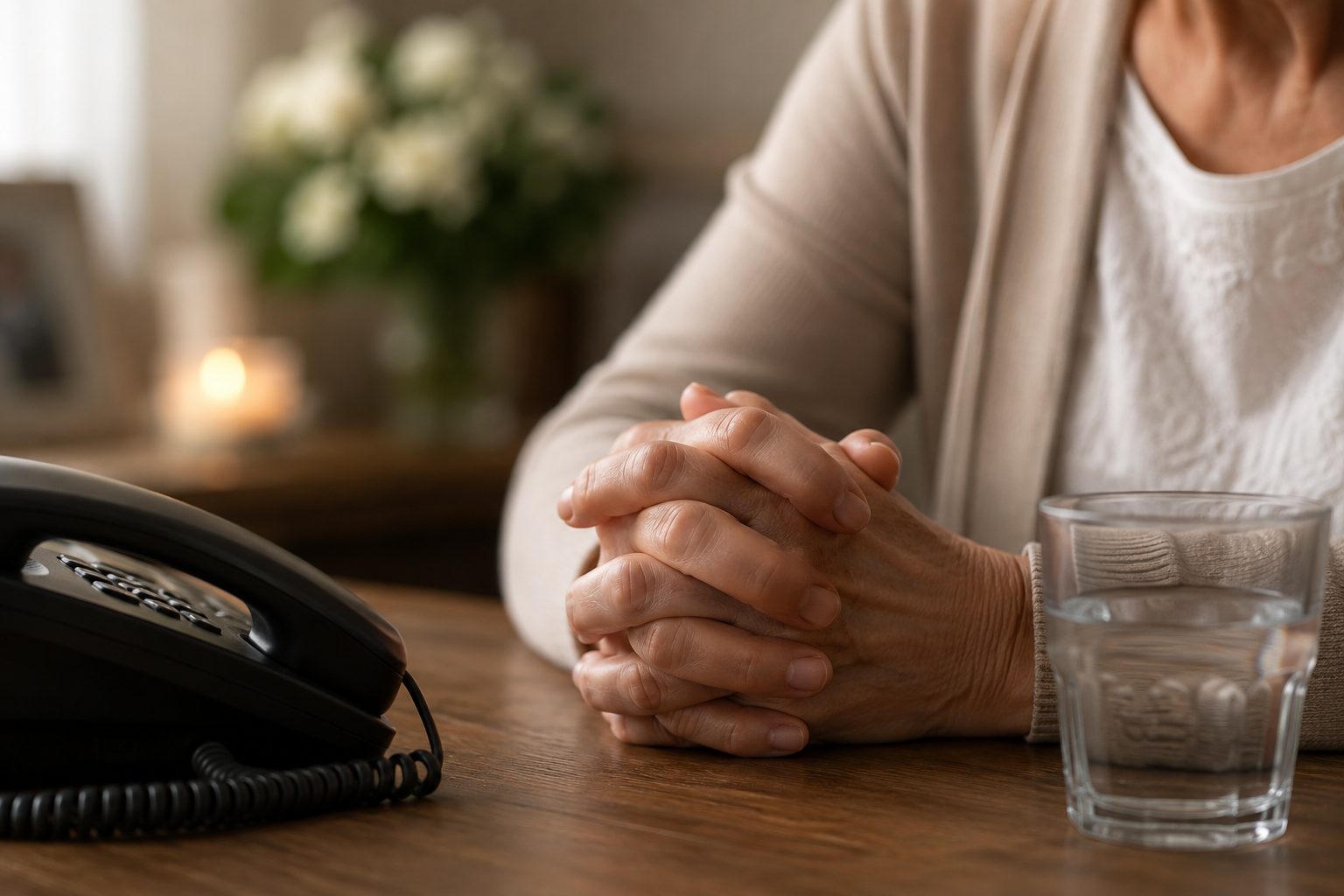
Most of what we write about here assumes a death that was, in some sense, expected — an illness, an elderly parent, a diagnosis the family had time to prepare for. A sudden or unnatural death is different, and not just emotionally. Under Thai law, it triggers a different process entirely, at the exact moment a family is least equipped to navigate one.
What counts as an "unnatural death"
Thai law treats several categories of death as "unnatural," including accidents, suicide, homicide, and any death with no immediately apparent medical cause. It also applies to any death that occurs in official custody. In each of these cases, the death cannot simply be certified by a doctor the way a hospital death typically is — it must be investigated.
What actually happens
By law, an unnatural death must be reported to the police, and the scene generally needs to be left undisturbed until they arrive — this is a legal requirement, not just a formality, and tampering with a scene before the authorities attend can carry real penalties. Police open an inquiry, and a forensic pathologist is required to lead the post-mortem examination. This is not optional or something a family can decline on cultural or religious grounds, though such concerns are noted and treated with respect.
The body is typically transferred to a hospital or forensic institute, and the autopsy itself is usually carried out fairly quickly, often within a day or two of the body arriving. What takes longer is everything around it: coordinating between the investigating officer, the forensic doctor, and often a prosecutor, especially if the case may involve a criminal element.
The part families find hardest: the waiting
An autopsy typically delays the release of the body by several days, even in cases where there is ultimately no suspicion of wrongdoing — this delay is procedural, not a sign that anything is wrong. The full written forensic report can take considerably longer, sometimes many weeks. The good news, and something few families realize at first, is that you do not need to wait for the final report to begin funeral, cremation, or repatriation arrangements. Once the body is formally released, planning can proceed while the paperwork is still being finalized behind the scenes.
Why this is exactly when expert help matters most
A family dealing with a sudden death is usually in acute shock, often in a foreign country, sometimes managing this from overseas entirely by phone. At the same time, they're expected to understand an unfamiliar legal process, coordinate with police and hospital administration, cover storage and handling fees before the body can be released, and make decisions about a funeral they had no time to prepare for — all while grieving.
This is precisely where a funeral director's coordination becomes less of a convenience and more of a necessity. We can liaise directly with the investigating officer and the hospital on the family's behalf, keep track of what's been settled and what's still pending, advise on what can move forward immediately versus what has to wait for release, and make sure nothing falls through the cracks simply because a family didn't know to ask about it.
If you're facing this right now
If you're reading this because it's happening to your family today: the process can feel bureaucratic and slow at a moment when you want everything to move quickly, and that disconnect is genuinely hard. You are not required to manage it alone, and you are not required to understand it fully before someone starts helping. If there's an international element to the case, our guide on what foreigners need to know about a death in Thailand covers the embassy and documentation side in more depth.
This article is general information, not legal advice. Every unnatural death case is handled individually by the investigating authorities, and timelines and requirements can vary. For anything specific to an active investigation, please rely on guidance from the police and the forensic team directly involved.